
Under pressure from the United States, more and more States are changing strategy and choosing cooperation with foreign tax authorities.
This was recently the case with Switzerland, which, after a few years of inertia, chose to strictly apply its commitments to disclose assets held in Switzerland by French residents.
This drastic policy change led thousands of French taxpayers to voluntarily disclose their hidden assets, with tax consequences of varying severity depending on each case and on how early they came forward voluntarily. In this context, a tax lawyer will very often be of crucial assistance to you.
So the Swiss chapter is closing.
Another one is opening: Israel.
Given the make-up of French society, after Switzerland it is the State of Israel that is most concerned by assets hidden abroad by French residents.
Here, of course, I am only concerned with the taxation of individuals.
Companies, especially the largest ones, have a much wider range of options than ordinary individuals in this area, and their favoured States are found all over the world.
France and Israel signed an agreement which recently entered into force, on 1st January 2017.
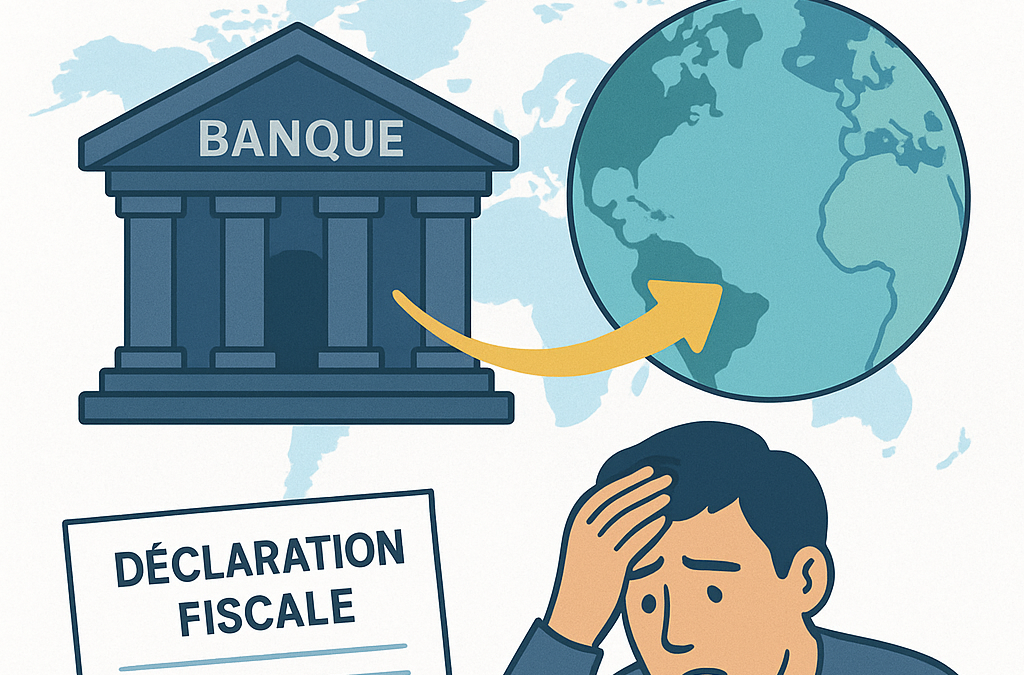
Israel has undertaken to disclose to the French authorities, mainly the tax authorities, the existence of Israeli assets held by French residents.
The term assets is very broad. More concretely, however, it mainly covers bank assets in Israel (current accounts, savings, life insurance…) and real estate located in Israel.
If you are concerned, you should consider whether a voluntary disclosure is appropriate.
For the time being, the terms of this regularisation remain fairly attractive (situation in 2017, before the closure of the STDR (Service de traitement des déclarations rectificatives) on 31 December 2017), but they could, of course, deteriorate, as happened with Switzerland.
Indeed, this is a balance of power: for the moment, Israel has not really begun to disclose its information on French nationals (update: Israel now applies the automatic exchange of bank account information, the CRS standard). So, for the time being, any taxpayer initiating a voluntary disclosure procedure will be treated fairly well.
IF, tomorrow, Israel were to start disclosing this information on a massive scale to the French tax authorities, generating an equally massive influx of voluntary disclosures, there is no doubt that the penalties would be increased.
As regards income tax, since France and Israel have signed a tax treaty containing an administrative assistance clause, the limitation period is in principle 3 years; however, in the case of undeclared bank accounts or life insurance contracts abroad, the reassessment period is extended to 10 years (Article L169 of the Tax Procedure Code (Livre des procédures fiscales, LPF)), whatever the State concerned, unless the total credit balances did not exceed €50,000 during the year.
In concrete terms, in the event of a voluntary disclosure, the tax authorities could go back as far as 10 years to charge you the evaded income tax, plus various penalties and late-payment interest (depending on your situation).
As regards the wealth tax (impôt de solidarité sur la fortune, ISF) (abolished since 1 January 2018 and replaced by the real estate wealth tax (impôt sur la fortune immobilière, IFI), which only targets real estate assets), the French tax authorities could go back much further: 10 years. Reassessments can therefore be very heavy, and the assistance of a tax lawyer will often be necessary.
Here again, a range of penalties would be applicable, with rates varying according to your specific situation. Mainly, this depends on the notion of passive income (inheritance, gift) or active income (professional activity). If your Israeli assets come from passive sources, for example an inheritance, you will be penalised less heavily for tax purposes than if they come from an undeclared professional activity.
For the time being, the terms for voluntary disclosures remain fairly attractive (update: the regularisation scheme known as the “STDR” closed on 31 December 2017; regularisations have since been subject to the ordinary rules).
And Israel has not yet really put pressure on its French foreign nationals.
Israel wishes to change tack and improve its relations with France.
This would mark a new phase in Franco-Israeli relations, which, until now, have not exactly been rosy.
All of this is highly political, but with very concrete financial consequences for the individuals concerned.
So do not wait until the last moment to come out of the shadows.
Doing so before others gives you a chance of being treated more favourably by the French tax authorities.




0 Comments